
Evidence-Informed Sessions on Property
I help women understand and care for their bodies as living, interconnected ecosystems, integrating functional medicine, somatic practices, and the restorative experience of time on the land.
Why this Approach?
If you've explored my work, you might be wondering:
Why does she do sessions outside?
Why side-by-side walking instead of sitting across a desk?
Why incorporate fire gazing?
Here's the truth: your body is an ecosystem—not a machine to fix or a problem to solve. Ecosystems don't heal through force. They heal when you remove what's invasive, create conditions for safety, and trust the process.
I approach this work through a similar lens: create supportive conditions, reduce what is creating strain, and allow change to unfold gradually rather than forcing it.
That's why my personalized sessions combine functional medicine foundations, somatic and nervous system practices, nature immersion, and whole-person inquiry. The format—walking side-by-side, being outdoors, time near fire—isn't arbitrary. Your nervous system responds to these conditions in ways that support clarity, regulation, and ease.
These choices are intentional, and research helps explain why.
Research Supporting This Approach
-
Greenspace & Health
Twohig-Bennett, C., & Jones, A. (2018).
The health benefits of the great outdoors: A systematic review and meta-analysis of greenspace exposure and health outcomes.
Environmental Research, 166, 628–637.
https://doi.org/10.1016/j.envres.2018.06.030 -
Nature & Stress
Jimenez, M. P., DeVille, N. V., Elliott, E. G., et al. (2021).
Associations between nature exposure and health: A review of the evidence.
International Journal of Environmental Research and Public Health, 18(9), 4790.
https://doi.org/10.3390/ijerph18094790 -
Green Exercize & Wellbeing
Hu, Y., Zhang, X., Li, J., Wang, L., & Chen, X. (2025). Effects of urban green exercise on mental health: A systematic review and meta-analysis. Frontiers in Public Health, 13, 1677223. https://doi.org/10.3389/fpubh.2025.1677223
-
Natural Environments & Restoration
Laezza, L., Vacondio, M., Fornasiero, A., Pellegrini, B., Pasini, M., Brondino, M., & De Dominicis, S. (2025). Evaluating the benefits of green exercise: A randomized controlled trial in natural and built environments assessed for their restorative properties. Psychology of Sport and Exercise, 80, Article 102883. https://doi.org/10.1016/j.psychsport.2025.102883
-
Walk-and-Talk Coaching
van den Berg, A. E., & Beute, F. (2021). Walk it off! The effectiveness of walk and talk coaching in nature for individuals with burnout- and stress-related complaints. Journal of Environmental Psychology, 76, Article 101641. https://doi.org/10.1016/j.jenvp.2021.101641
-
Fire & Relaxation
Lynn, C. D. (2014). Hearth and campfire influences on arterial blood pressure: Defraying the costs of the social brain through fireside relaxation. Evolutionary Psychology, 12(5), 983–1003. https://doi.org/10.1177/147470491401200509
Your body is an ecosystem
—not a machine to fix
Side-by-Side Walking: Reduced Pressure, Increased Regulation
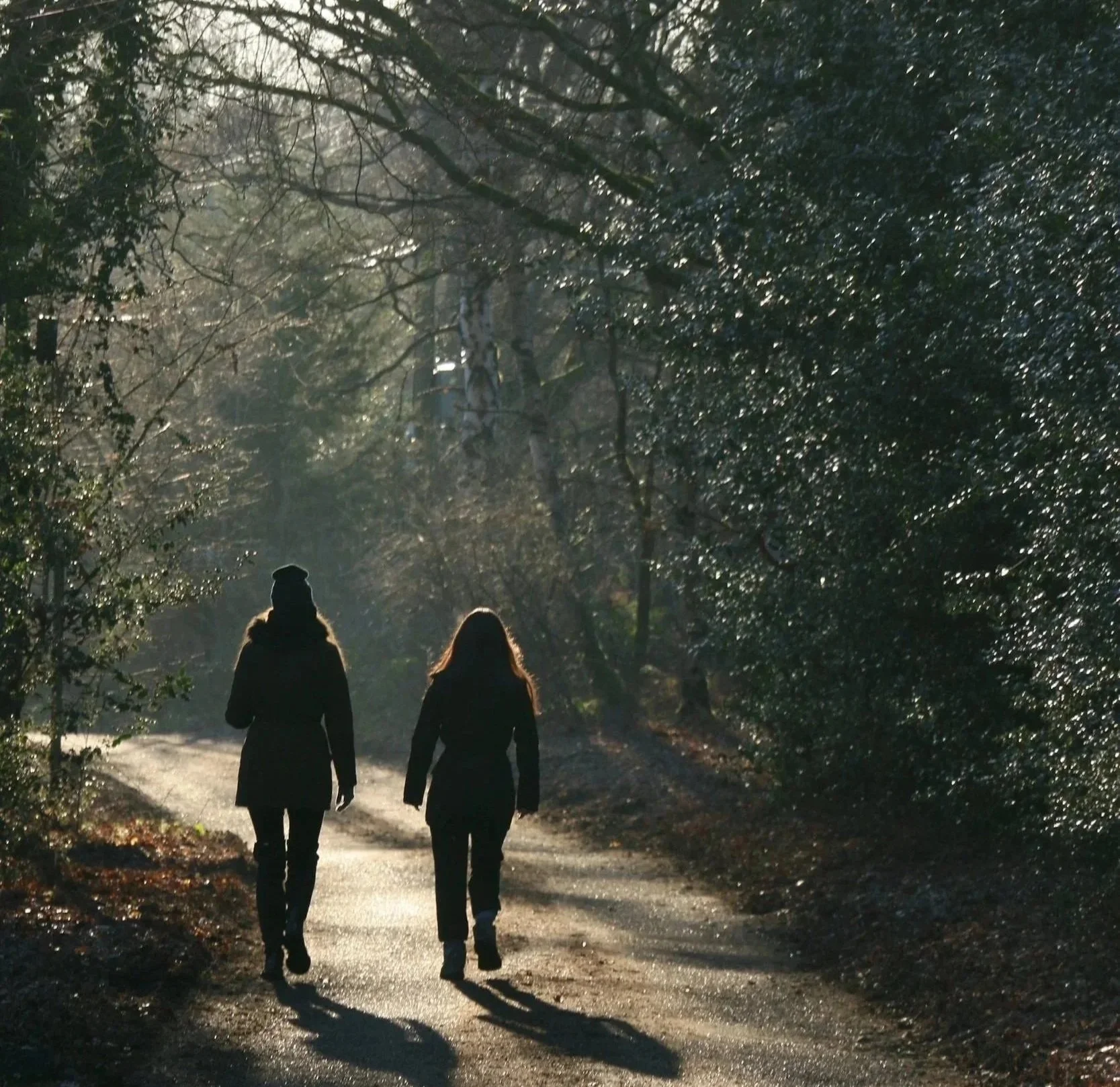
Research on interpersonal movement synchrony has found associations with rapport and positive social perception. Research on walk-and-talk coaching in natural settings has also found improvements in stress, burnout symptoms, mental health, and well-being among participants compared with a passive control group. Together, these findings help inform the walking format I use in some sessions.
What this means: Sessions often involve side-by-side walking on trails throughout the property, supporting ease of conversation and nervous system regulation.
More Research:
Cheng, M., Kato, M., Saunders, J. A., & Tseng, C. (2020). Paired walkers with better first impression synchronize better. PLOS ONE, 15(2), e0227880. https://doi.org/10.1371/journal.pone.0227880
Miles, L. K., Nind, L. K., & Macrae, C. N. (2009). The rhythm of rapport: Interpersonal synchrony and social perception. Journal of Experimental Social Psychology, 45(3), 585–589. https://doi.org/10.1016/j.jesp.2009.02.002
The land isn't a backdrop
—it's part of the work
Nature Exposure: Measurable Stress Recovery
It's not just that nature feels good. Your body measurably responds to it.
Green exercise, physical activity in natural environments, consistently improves mood and mental well-being. Studies measuring heart rate, cortisol levels, and heart rate variability show more favorable stress-recovery markers in green settings than in urban or indoor environments. Studies comparing natural and built environments have found benefits associated with time and movement in natural settings, including improvements in mood, relaxation, and stress-related measures.
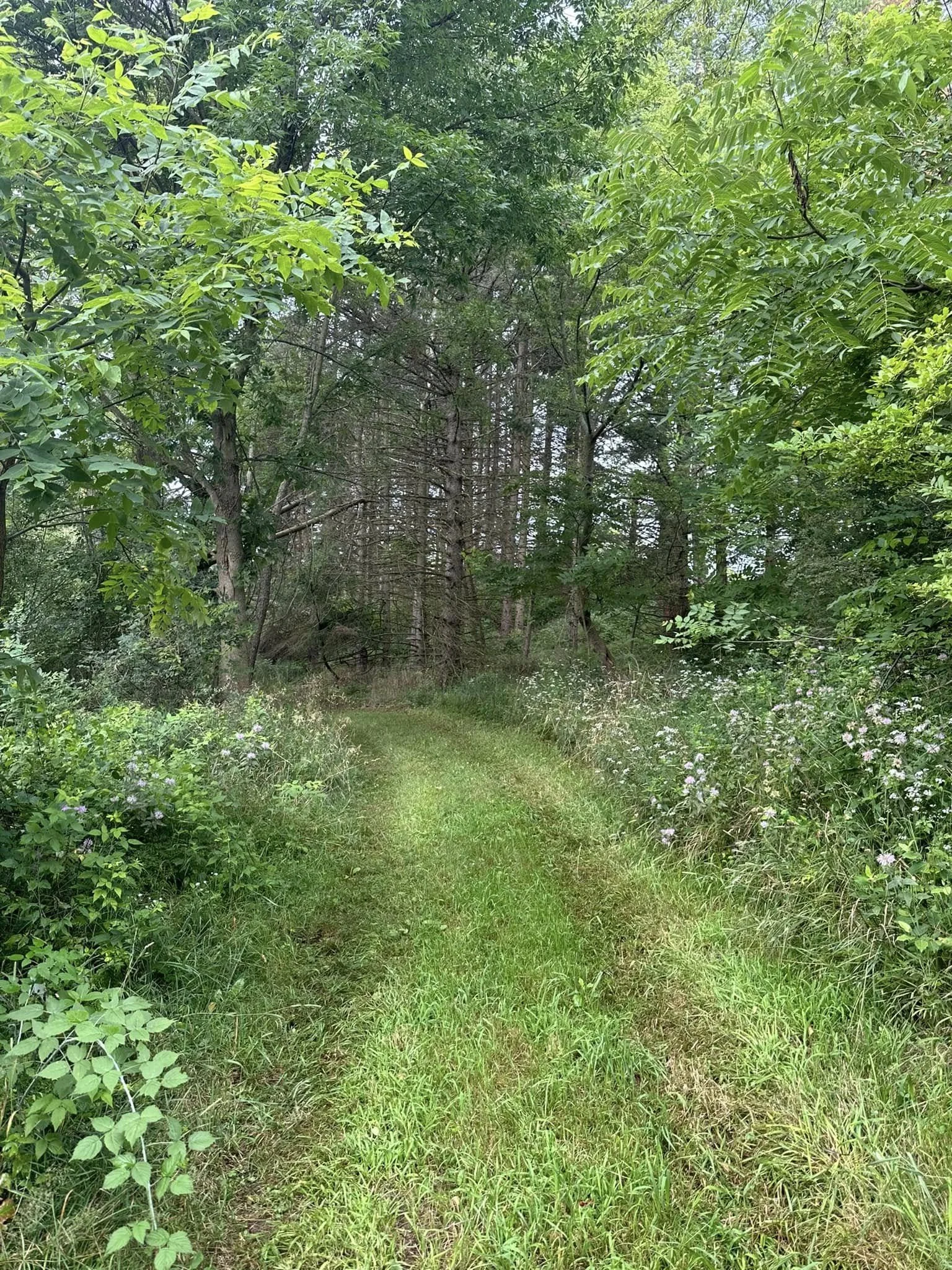
What this means: Sessions take place outdoors on conserved land because research associates natural environments with improvements in mood, wellbeing, and physiological stress recovery. The land isn't simply a backdrop. It's an intentional part of how the session is structured.
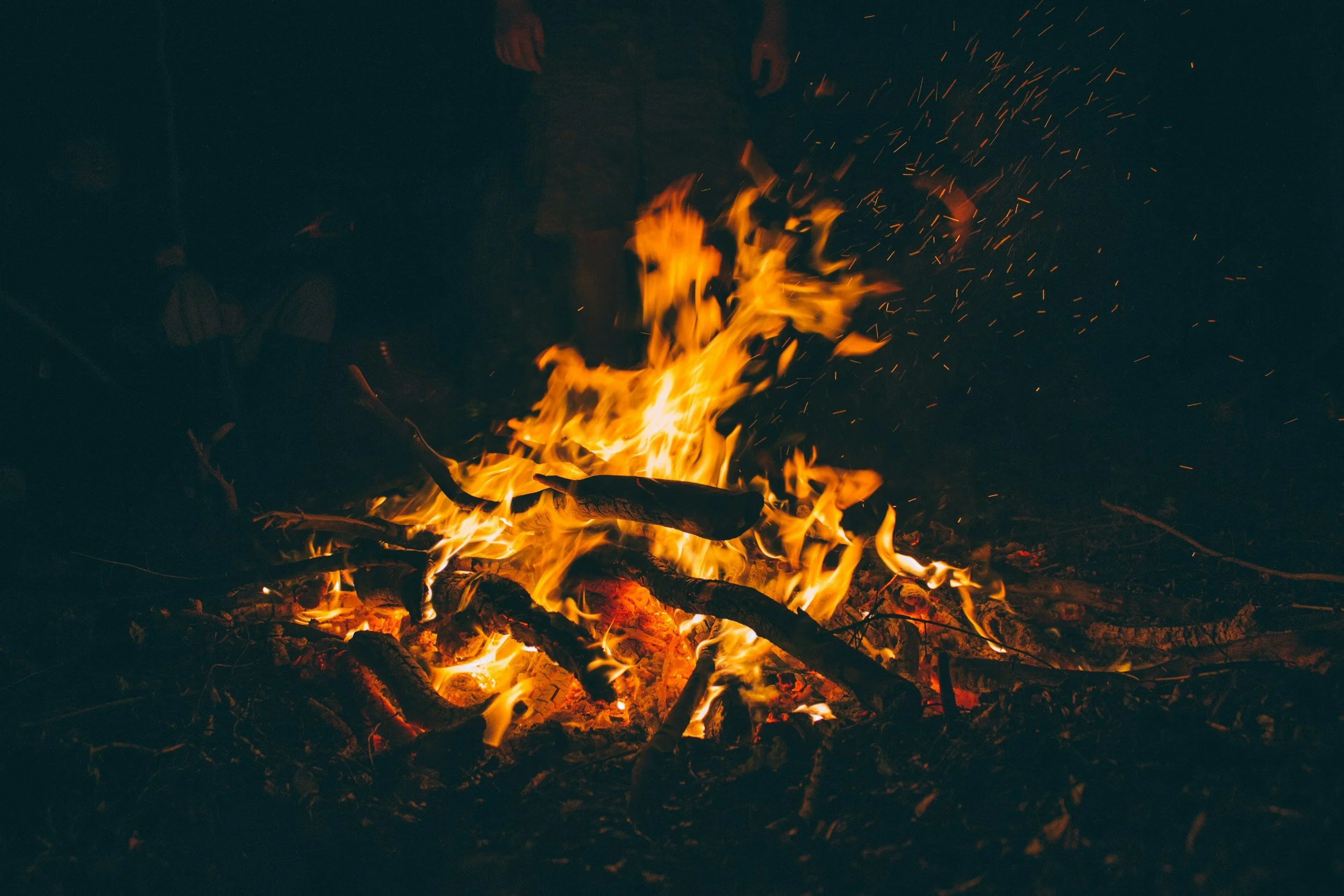
I don't force healing
—I create space for it
Fire Gazing: Parasympathetic Downshifting
Research suggests that multisensory exposure to fire, including its visual and auditory qualities, may support relaxation. In controlled studies, fire with sound has been associated with reductions in blood pressure, particularly with longer exposure.
What this means: Quiet time near a fire may be incorporated as one of several ways to create a calm, restorative setting.
More Evidence:
Clark, L., Landgraf, L., & Lynn, C. (2024). The influence of domestic fire on blood pressure and heart rate: A replication study [Preprint]. Research Square. https://doi.org/10.21203/rs.3.rs-5218831/v1
What I'm NOT Claiming
These sessions are not therapy or medical treatment. I'm not diagnosing, prescribing, or treating any condition.
What I am doing is creating conditions that support clarity, grounding, and inner peace. I'm not promising outcomes; I'm creating supportive conditions. The science here legitimizes the environment and format of how I work: the side-by-side walking, the nature immersion, the fire, the land. These elements are evidence-informed, intentional, and create space for your own body's wisdom to surface.
Sessions are educational and experiential in nature and are not a substitute for medical or psychological care.
How We Work Together
My 1:1 work combines:
Functional medicine foundations (nutrition, sleep, stress physiology, hormone health)
Somatic and nervous system practices (breathwork, grounding, body awareness)
Nature immersion (walking, stillness, seasonal rhythms, fire)
Whole-person inquiry (What is your body trying to tell you? What patterns keep recreating the stress?)
We work at your pace. We honor your window of tolerance. We build capacity slowly, the way ecosystems restore themselves—by creating conditions for safety first, then gradual, sustainable growth.
Ready to Explore Working Together?
If this approach resonates with you and you’re looking for a more connected, whole-person approach to your well-being, there are many ways to begin.
Experience the Wild Peacery
-
The Inner Peace Compass™ Check
A whole-person ecology assessment designed to explore what may be supporting or disrupting your sense of balance and well-being.
-
Slice of Peace: Customized 1:1 Sessions
A 75-minute evidence-informed session at The Wild Peacery Sanctuary, with space for conversation, reflection, and connection with nature.
-
Events at The Wild Peacery
Small group experiences that invite women to learn, connect, try something new, and spend meaningful time together. Past events have included Thai bodywork and massage, Chainsaw Confidence, and a Foragers Friendsgiving.
-
Private Group Experiences and Sanctuary Rental
Gather your people and make The Wild Peacery your own for the day. Plan a girls’ getaway, a meaningful celebration, a day of rest and reconnection, or a private experience created especially for your group.
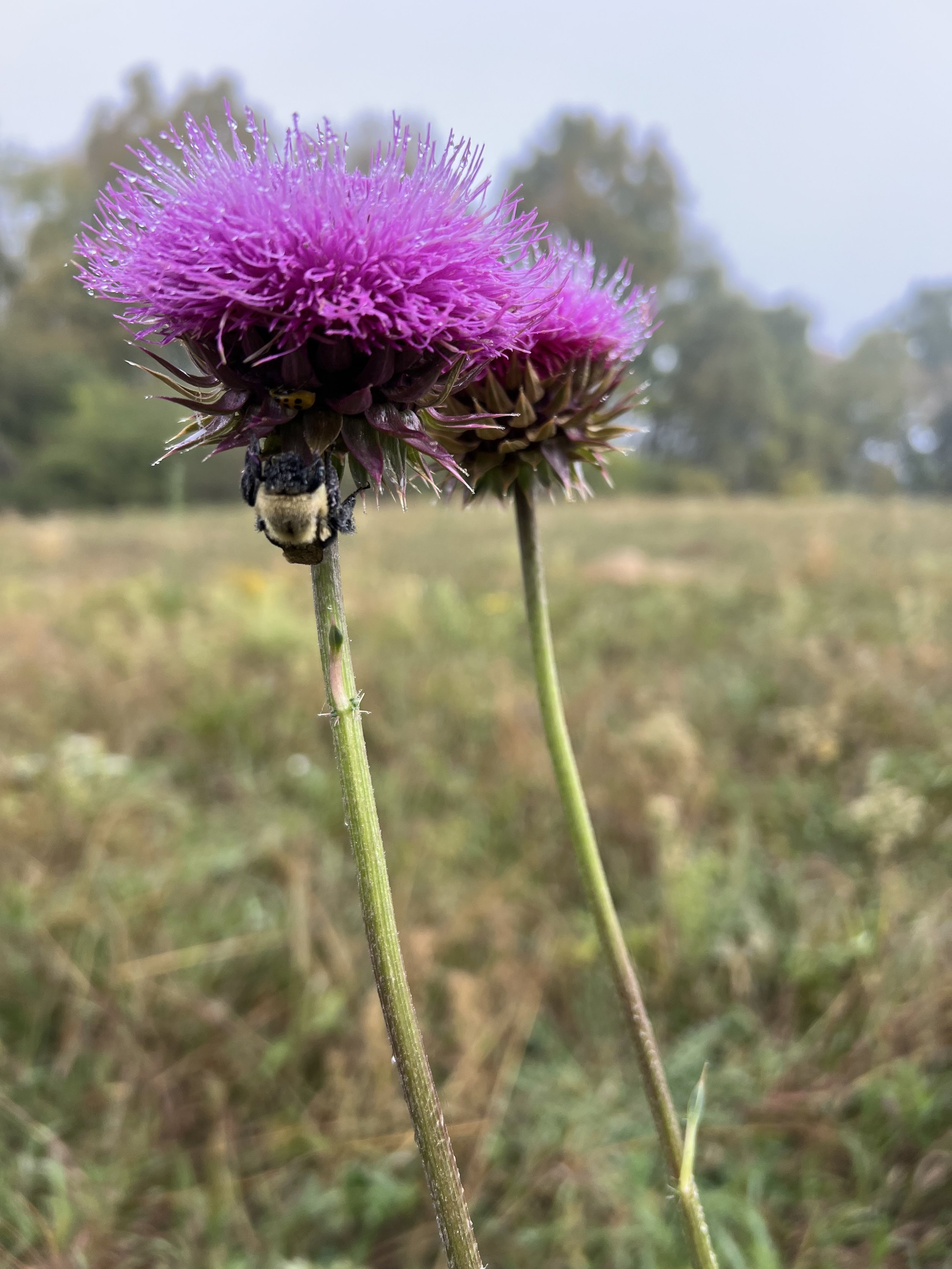
Slice of Peace:
Customized 1:1 Sessions
Additional Resources
Nature exposure and mental health:
Koselka, E. P. D., Weidner, L. C., Minasov, A., Berman, M. G., Leonard, W. R., Santoso, M. V., de Brito, J. N., Pope, Z. C., Pereira, M. A., & Horton, T. H. (2019). Walking green: Developing an evidence base for nature prescriptions. International Journal of Environmental Research and Public Health, 16(22), Article 4338. https://doi.org/10.3390/ijerph16224338
Chen, H., Meng, Z., & Luo, J. (2025). Is forest bathing a panacea for mental health problems? A narrative review. Frontiers in Public Health, 13, Article 1454992. https://doi.org/10.3389/fpubh.2025.1454992
Aras, S. G., Runyon, J. R., Kazman, J. B., Thayer, J. F., Sternberg, E. M., & Deuster, P. A. (2024). Is greener better? Quantifying the impact of a nature walk on stress reduction using HRV and saliva cortisol biomarkers. International Journal of Environmental Research and Public Health, 21(11), Article 1491. https://doi.org/10.3390/ijerph21111491
Chen, L., Yan, R., & Hu, Y. (2025). City walk or nature walk? Evidence-based psychological and physiological outcomes: A systematic review and meta-analysis. Urban Forestry & Urban Greening, 106, Article 128726. https://doi.org/10.1016/j.ufug.2025.128726
Paredes-Céspedes, D. M., Vélez, N., Parada-López, A., Toloza-Pérez, Y. G., Téllez, E. M., Portilla, C., González, C., Blandón, L., Santacruz, J. C., & Malagón-Rojas, J. (2024). The effects of nature exposure therapies on stress, depression, and anxiety levels: A systematic review. European Journal of Investigation in Health, Psychology and Education, 14(3), 609–622. https://doi.org/10.3390/ejihpe14030040
Ochiai, H., Inoue, S., Masuda, G., Amagasa, S., Sugishita, T., Ochiai, T., Yanagisawa, N., Nakata, Y., & Imai, M. (2025). Randomized controlled trial on the efficacy of forest walking compared to urban walking in enhancing mucosal immunity. Scientific Reports, 15, Article 3272. https://doi.org/10.1038/s41598-025-87704-2
Nguyen, P. Y., Astell-Burt, T., Rahimi-Ardabili, H., & Feng, X. (2023). Effect of nature prescriptions on cardiometabolic and mental health, and physical activity: A systematic review. The Lancet Planetary Health, 7(4), e313–e328. https://doi.org/10.1016/S2542-5196(23)00025-6.