
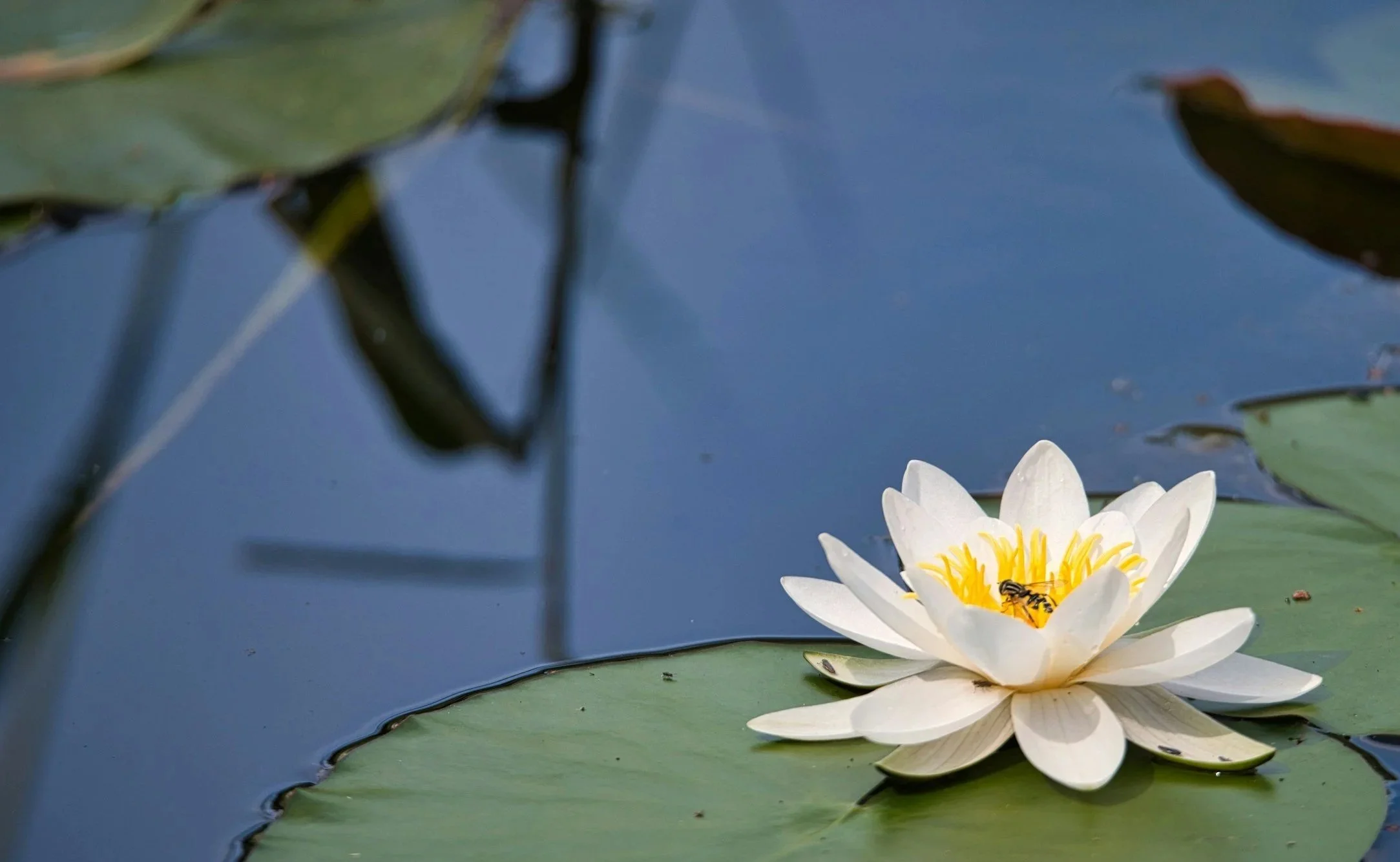
Evidence-Informed 1:1 Coaching
I help women treat their bodies like the living ecosystems they are—using functional medicine, somatic practices, and the wisdom of this land.
Why Nature? Why Walking? Why Fire?
If you've explored my work, you might be wondering:
Why does she do sessions outside?
Why side-by-side walking instead of sitting across a desk?
Why incorporate fire gazing?
Here's the truth: your body is an ecosystem—not a machine to fix or a problem to solve. Ecosystems don't heal through force. They heal when you remove what's invasive, create conditions for safety, and trust the process.
The same principles that restore rivers, forests, and damaged land also restore people.
That's why my 1:1 work combines functional medicine foundations, somatic and nervous system practices, nature immersion, and whole-person inquiry. The format—walking side-by-side, being outdoors, time near fire—isn't arbitrary. Your nervous system responds to these conditions in ways that support clarity, regulation, and ease.
And the research backs it up.
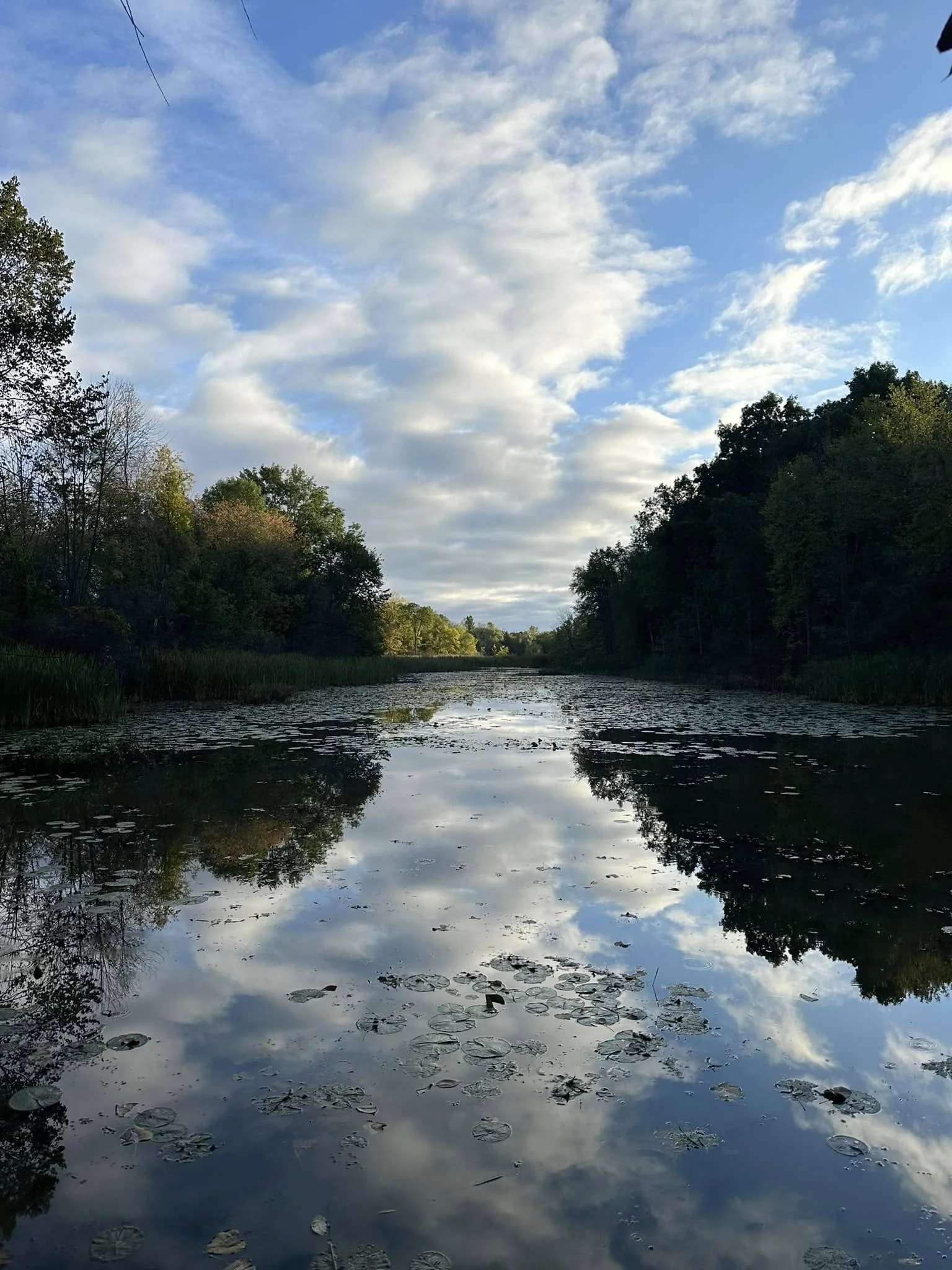
Your body is an ecosystem
—not a machine to fix
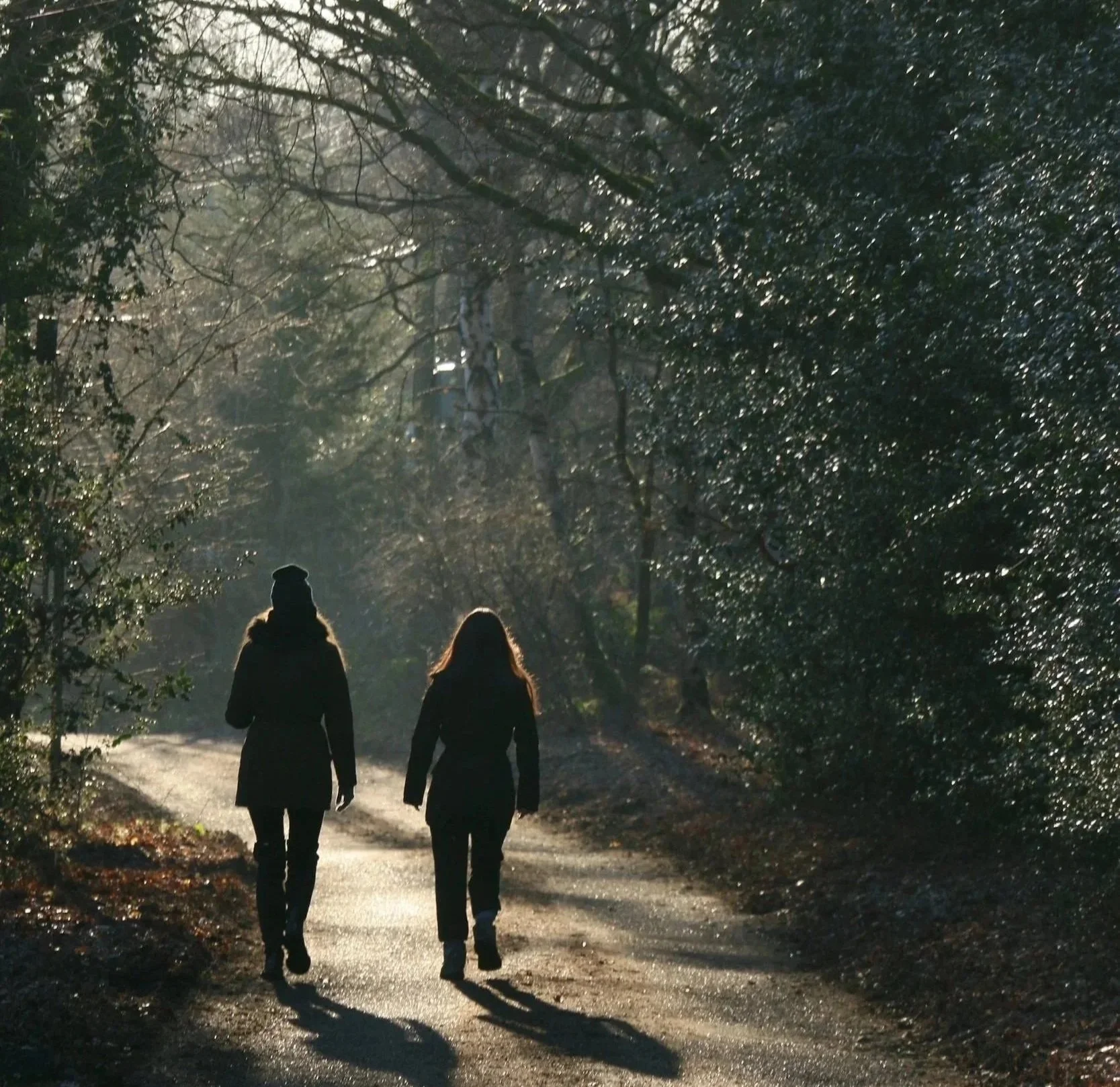
Side-by-Side Walking: Reduced Pressure, Increased Regulation
Research shows that interpersonal movement synchrony is associated with rapport and positive social perception. Walk-and-talk formats reduce stress and burnout, with participants showing measurable improvements in wellbeing compared to traditional seated sessions. Walking outdoors supports emotional regulation—the rhythmic movement combined with nature creates conditions where your nervous system can downshift without force.
What this means: Sessions often involve side-by-side walking on trails throughout the property, supporting ease of conversation and nervous system regulation in ways that face-to-face seated interactions simply don't.
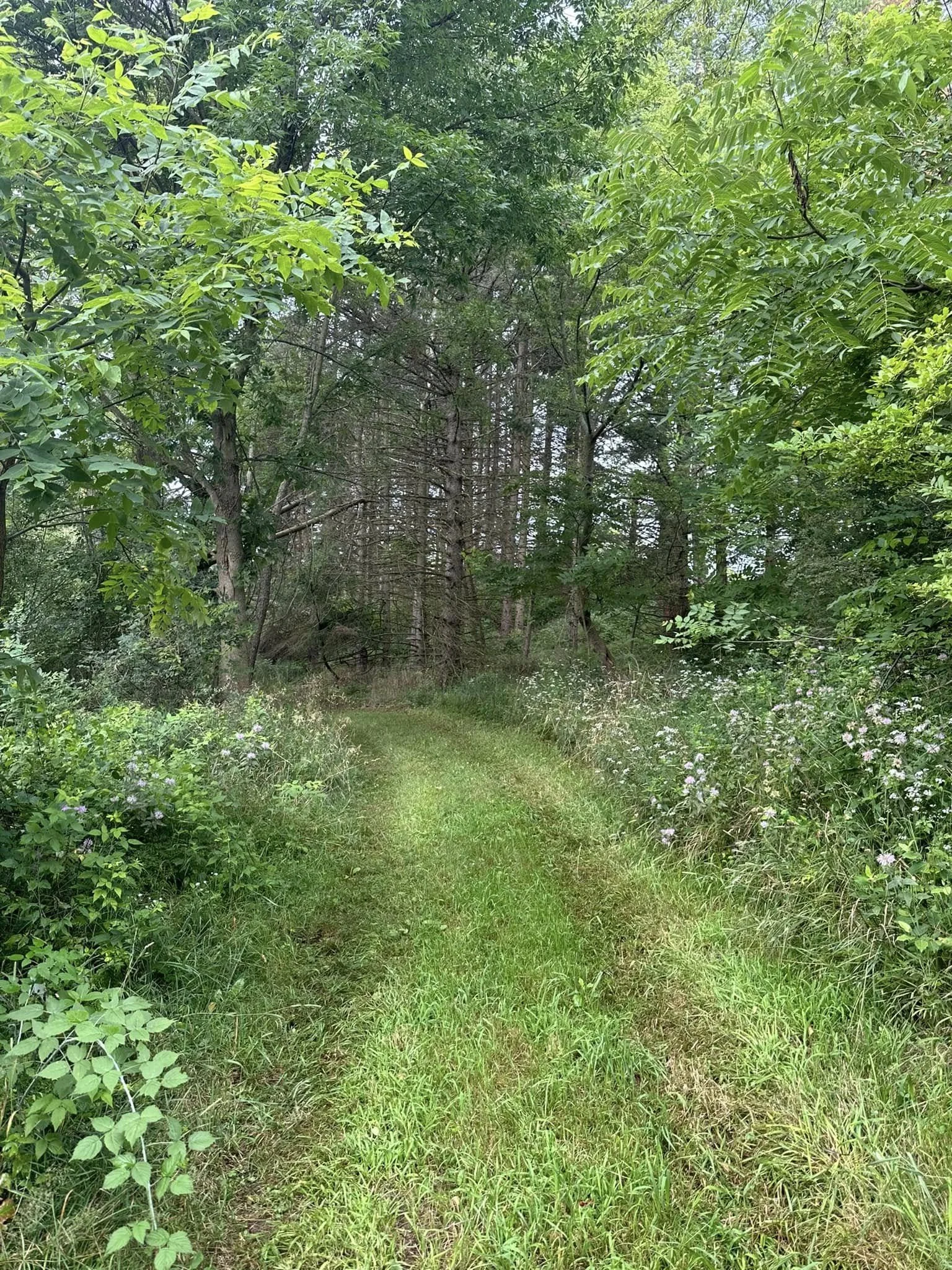
The land isn't a backdrop
—it's part of the work
Nature Exposure: Measurable Stress Recovery
It's not just that nature feels good. Your body measurably responds to it.
Green exercise—physical activity in natural environments—consistently improves mood and mental wellbeing. Studies measuring heart rate, cortisol levels, and heart rate variability show more favorable stress recovery markers in green settings compared to urban or indoor environments. Forest and natural settings consistently outperform other environments for psychological restoration.
What this means: Sessions take place outdoors on conserved land because research shows improvements in mood and stress recovery that we can't replicate in a clinical office. The land isn't a backdrop—it's part of the work.
I don't force healing
—I create space for it
Fire Gazing: Parasympathetic Downshifting
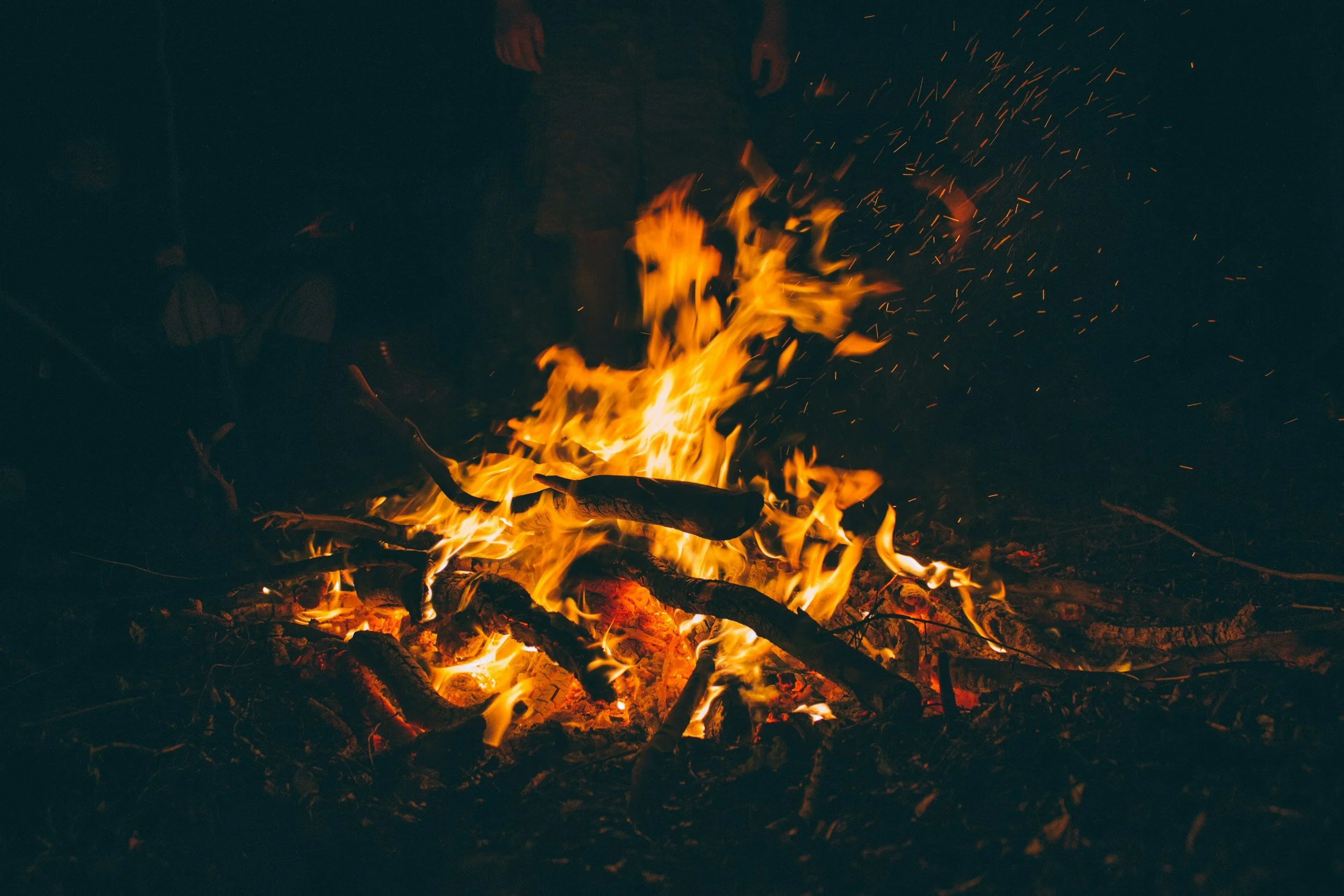
Controlled studies show that visual and auditory exposure to fire is associated with reduced blood pressure. Fire functions as an absorptive, regulating stimulus—drawing your attention in a soft, sustained way that allows your mind to rest without effort. Multisensory fire exposure enhances relaxation responses and supports cardiovascular downshifting.
What this means: Quiet time near a fire may be incorporated, as studies show that observing fire can support relaxation and lower physiological stress markers.
What I'm NOT Claiming
These sessions are not therapy or medical treatment. I'm not diagnosing, prescribing, or treating any condition.
What I am doing is creating conditions that support clarity, grounding, and inner peace. I'm not selling outcomes—I'm selling conditions. The science here legitimizes the environment and format of how I work: the side-by-side walking, the nature immersion, the fire, the land. These elements are evidence-informed, intentional, and create space for your own body's wisdom to surface.
Sessions are educational and experiential in nature and are not a substitute for medical or psychological care.
How We Work Together
My 1:1 work combines:
Functional medicine foundations (nutrition, sleep, stress physiology, hormone health)
Somatic and nervous system practices (breathwork, grounding, body awareness)
Nature immersion (walking, stillness, seasonal rhythms, fire)
Whole-person inquiry (What is your body trying to tell you? What patterns keep recreating the stress?)
We work at your pace. We honor your window of tolerance. We build capacity slowly, the way ecosystems restore themselves—by creating conditions for safety first, then gradual, sustainable growth.
Ready to Explore Working Together?
If this approach resonates—if you're tired of surface fixes and ready to treat your body as the living ecosystem it is—let's talk.
I offer:
The Inner Peace Compass™ Check — a whole-person ecology assessment
Personalized Compass Readings — custom insights and somatic practices delivered within 1-3 days
9-Month Sacred Journey — deep, ongoing 1:1 support with bi-monthly check-ins, Voxer access, and a 2-night retreat on the land
Reference list
Side-by-side walking, rapport, and stress reduction:
Cheng, M., Kato, M., Saunders, J. A., & Tseng, C. (2020). Paired walkers with better first impression synchronize better. PLOS ONE, 15(2), e0227880. https://doi.org/10.1371/journal.pone.0227880
Miles, L. K., Nind, L. K., & Macrae, C. N. (2009). The rhythm of rapport: Interpersonal synchrony and social perception. Journal of Experimental Social Psychology, 45(3), 585–589. https://doi.org/10.1016/j.jesp.2009.02.002
van den Berg, A. E., & Beute, F. (2021). Walk it off! The effectiveness of walk-and-talk coaching in nature for enhancing well-being. Coaching: An International Journal of Theory, Research and Practice, 14(3–4), 241–257. https://doi.org/10.1080/17521882.2021.1881575
Nature exposure and mental health:
Hu, Y., Zhang, X., Li, J., Wang, L., & Chen, X. (2025). Effects of urban green exercise on mental health: A systematic review and meta-analysis. Frontiers in Public Health, 13, 1677223. https://doi.org/10.3389/fpubh.2025.1677223
Koselka, E. P., Weidner, L. C., Minasov, A., Berman, M. G., Leonard, W. R., Santoso, M. V., de Brito, J. N., & Alberts, S. C. (2019). Walking green: Developing an evidence base for nature prescriptions. International Journal of Environmental Research and Public Health, 16(22), 4338. https://doi.org/10.3390/ijerph16224338
Laezza, F., Vacondio, M., Ferloni, M., & Pietrantoni, L. (2025). Evaluating the benefits of green exercise: A randomized controlled trial in natural and built environments assessed for their restorative properties. Psychology of Sport and Exercise, 73, 102883. https://doi.org/10.1016/j.psychsport.2025.102883
Fire gazing and relaxation:
Clark, L., Landgraf, L., & Lynn, C. (2024). The influence of domestic fire on blood pressure and heart rate: A replication study [Preprint]. Research Square. https://doi.org/10.21203/rs.3.rs-5218831/v1
Lynn, C. D. (2014). Hearth and campfire influences on arterial blood pressure: Defraying the costs of the social brain through fireside relaxation. Evolutionary Psychology, 12(5), 983–1003. https://doi.org/10.1177/147470491401200509